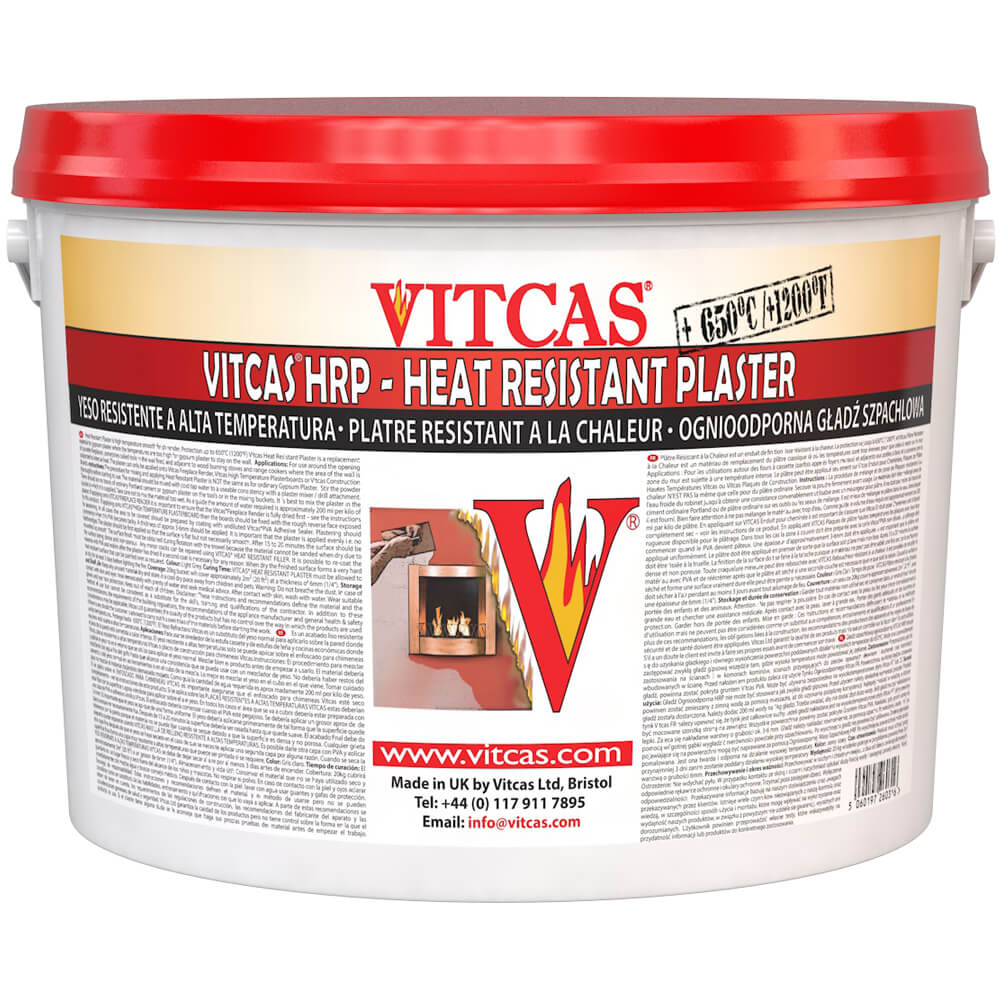
A smooth surface around the fireplace can be planned based on a specific material system. At the Vitcas store, Heat Resistant Plaster is available and described as a heat-resistant finish. A smooth surface results from preparing the substrate, the layer thickness, and treatment according to the instructions for this product.
Check the product's purpose
Heat Resistant Plaster has a declared resistance up to 650°C in the described applications. It is used, among other things, for smooth surface finishing near heating appliances. High temperature does not imply any structural function or the possibility of hiding substrate movement.
The material requirements must be compared with the installation site and the insert. Mark the heating area and the condition of the current layer. Do not treat every crack as a minor defect meant to be covered with plaster.
Prepare the substrate according to the system
The documentation describes application on the appropriate Fireplace Render or prepared HT boards. Check their readiness and the required priming. On the boards, the side of the sheet indicated for plastering also matters.
The HR instruction specifies a layer of 3–6 mm. Do not use a thin finish to fill any depth of defect. The thickness and substrate preparation should be determined before mixing the next batch.
Achieve smoothness during trowelling
Use clean tools and follow the mixing instructions. The finish is achieved while working on the fresh surface; the manufacturer does not provide for regular sanding of dry HR. Choose decoration only after the layer has been properly prepared.
Record the products, dates, and the completed cross-section. Describe the actual materials when recording the work. Well-prepared documentation will also allow you to return to the substrate if repair of a specific area is needed later.