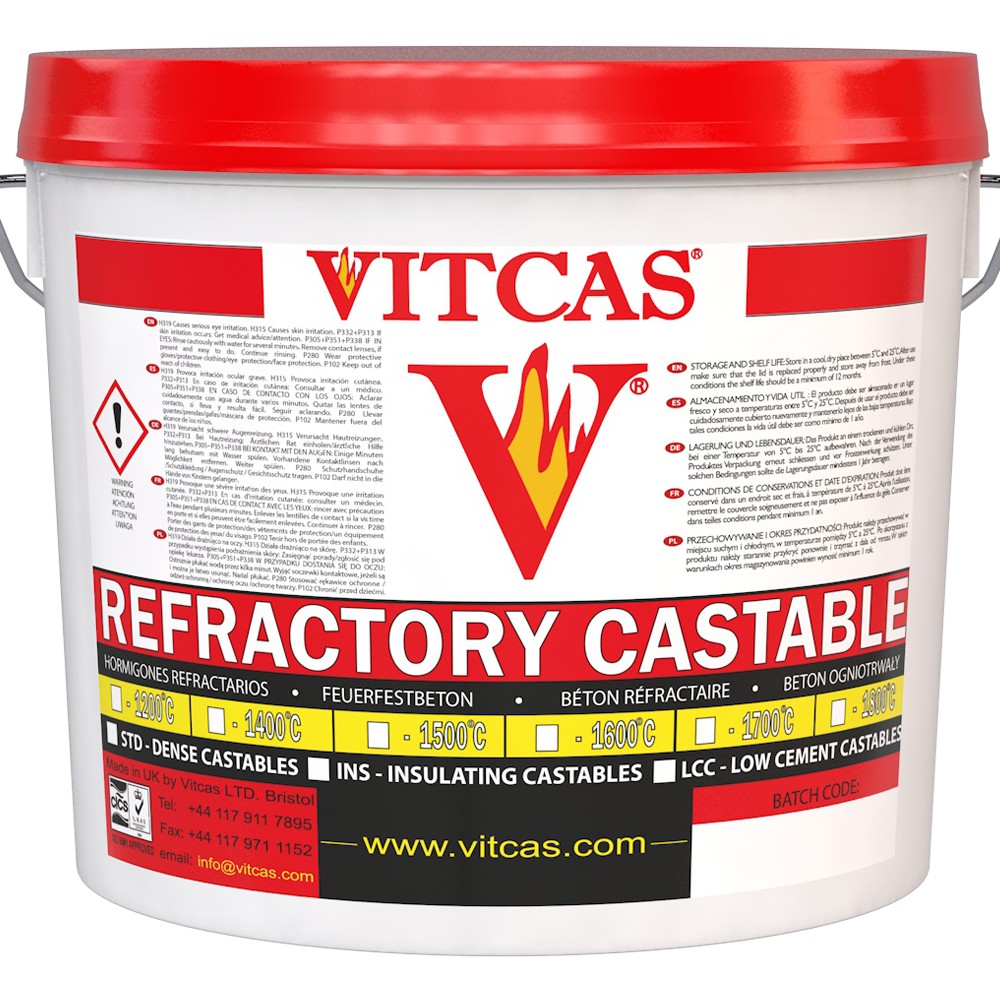
A deeper defect requires understanding the entire cross-section, not just selecting a stronger compound. The substrate, support, and equipment requirements must be checked. Refractory Castable can be considered in the described application when both the material and geometry match the specific repair solution.
Record dimensions and surrounding condition
Measure the area, depth, and access to the spot on the cold device. Add photos of adjacent layers and fastenings. If the defect exposes other parts, assess their condition before covering; new material does not automatically repair the support or damaged metal.
Refractory Castable Grade 1600 is a dense refractory material. Selection includes the intended thickness, method of application, and preparation for temperature. High resistance does not describe arbitrary forming of any surface without device documentation.
Distinguish between castable and minor repair
Premium Fire Cement covers the scope of described minor indoor repairs. Do not treat it as an automatic filler for every depth. The purpose of the material and the condition of the substrate should match the geometry, not just the amount remaining in the package.
Heatproof Screed has separate requirements and applications. Compare the documentation instead of selecting a product solely based on consistency or temperature. A dense working layer on a hot surface is not simultaneously a light insulation for the entire system.
Plan preparation before mixing
Determine the method of support, execution, and required working conditions of the material. Measure water according to the specific product and keep tools clean. Take into account setting, drying, and controlled preparation before full use of the equipment.
Record the executed cross-section, material variant, and dates of the stages. A dry surface does not by itself describe the entire thicker layer. During the next review, the documentation will allow distinguishing a repair change from a problem existing in the substrate before work began.